

Kraft Paper Range
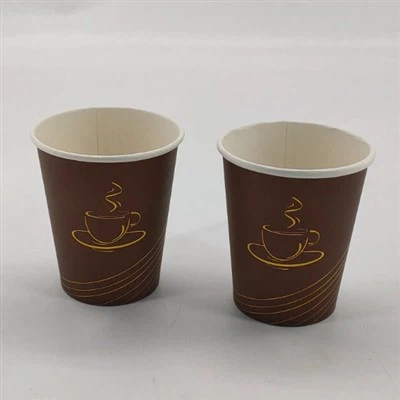
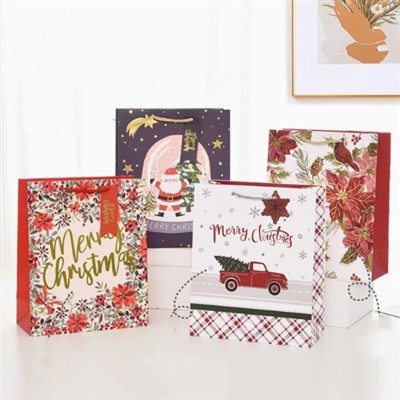
Ecolink supplies kraft paper packaging for food service, retail, takeaway, beverage and gift packaging applications. Our range includes kraft paper food containers, paper cups, stand-up pouches, shopping bags, bakery boxes, wine gift boxes and produce baskets. As a kraft paper packaging supplier serving B2B buyers, we support product specification review, custom printing, packaging design coordination and bulk purchasing enquiries. Buyers can specify dimensions, paper weight, closure type, window material and packing requirements before sampling. Food-contact suitability, recyclability claims, minimum order quantities and production lead times are confirmed against each product's material structure and order specifications.
-
![Disposable Paper Pizza Saver Stand]()
Disposable Paper Pizza Saver Stand
Compostable Restaurant Take-Away Food Box Disposable Paper Pizza Saver Stand
-
![8oz Disposable Paper Coffee Cups]()
-
![7oz Disposable Paper Cups With Handle]()
-
![Durable Cork Lunch Box Bag For Work Picnic]()
Durable Cork Lunch Box Bag For Work Picnic
Adult Durable Cork Lunch Box Bag for Work, Picnic, Travel and More
-
![Christmas Gift Handbags Shopping Bag]()
-
![Small Punnets Vented Kraft Paper Blueberry Basket]()
Small Punnets Vented Kraft Paper Blueberry Basket
Small Punnets Vented Natural Kraft Paper Blueberry Basket
-
![Wooden Lunch Box Transparent UV-Anti-Bacterial Lid]()
Wooden Lunch Box Transparent UV-Anti-Bacterial Lid
Wooden Lunch Box Transparent UV-Anti-Bacterial Lid
-
![Disposable Fast Food Takeaway Lunch Box For Sushi]()
-
![Rectangle Food Box Hot Selling Wood Packaging]()
-
![Disposable Wooden Food Takeout Boxes Containers]()
Disposable Wooden Food Takeout Boxes Containers
Biodegradable Takeout Boxes, Disposable Wooden Food Containers
-
![Wooden Bottom Support Strip Bread Baking Pan Tray]()
Wooden Bottom Support Strip Bread Baking Pan Tray
20PCS/Set Bread Baking Tray Wooden Strip Bottom Support Disposable Wooden Baking Pan
-
![96 Oz Fill & Go Coffee Take Out Carriers With Handle]()
96 Oz Fill & Go Coffee Take Out Carriers With Handle
96 Oz Fill & Go coffee take out container Disposable Paper Beverage Coffee Carriers with handle





Technical Specifications & Commercial Selection Matrix

Selecting kraft paper packaging requires more than choosing a brown paper appearance. Paper weight, product geometry, barrier coatings, adhesive performance and the intended filling process all affect the finished package. A paper pouch for dry goods, a cup for hot coffee and a vented berry basket have different performance requirements and should not be evaluated using the same specification.
Packaging Material and Specification Comparison
The following matrix provides a procurement framework. Values marked as project-dependent must be confirmed against the selected SKU, approved sample or technical datasheet before purchase.
| Material Grade | Moisture Content | Density / Tolerance | Surface Treatment | Compliance Testing | Standard MOQ | Production Lead Time |
| Uncoated kraft paper | Specify paper moisture limits with the supplier | Paper weight in gsm; finished dimensions per drawing | Uncoated kraft surface | Verify intended food-contact use and applicable requirements | Confirm by SKU and order quantity | Confirm after artwork and sample approval |
| Grease-resistant paper | According to paper specification | GSM, grease resistance and finished dimensions | Grease-resistant treatment, if specified | Review food-contact documentation and treatment composition | Confirm by construction and order quantity | Confirm by material availability |
| PE-coated paper | According to paper specification | GSM, coating weight and dimensional tolerances | Polyethylene barrier coating | Assess the complete food-contact structure and applicable local requirements | Confirm by cup or container specification | Confirm after design approval |
| PLA-coated paper | According to paper specification | GSM, coating weight and forming tolerances | PLA-based barrier coating | Verify food-contact suitability and any applicable compostability certification | Confirm by SKU and production setup | Confirm by material availability |
| Paperboard for bakery and gift boxes | According to board specification | Board caliper, dimensions and folding tolerance | Printed, uncoated or coated finish | Check inks, adhesives and intended use where relevant | Confirm by size, print and tooling requirements | Confirm after dieline and artwork approval |
| Kraft paper pouches with window | According to the paper and laminate specifications | GSM, pouch dimensions, seal width and window dimensions | Paper surface with a specified window and barrier structure | Assess all food-contact layers and adhesives where applicable | Confirm by size, barrier structure and printing | Confirm after structure and artwork approval |
| Recycled kraft paperboard | According to board specification | Caliper, compression performance and finished dimensions | Natural, printed or coated surface | Verify recycled-material documentation and suitability for the intended application | Confirm by product design | Confirm by material availability |
How to Select the Right Packaging Structure
For takeaway food containers
confirm the container's volume, lid fit, resistance to leakage and suitability for the intended food temperature. A paper appearance alone does not establish grease resistance, liquid resistance or microwave suitability. Where a product includes an aluminium component or plastic lining, the full structure must be checked against the intended heating and food-contact conditions.
For coffee cups and beverage carriers
specify cup capacity, single-wall or double-wall construction, rim diameter, lid compatibility and the required barrier coating. For paper pouches, check the seal structure, window material, moisture and oxygen barrier requirements, and compatibility with the filling and sealing equipment. For bakery and gift boxes, the dieline, folding sequence, adhesive joints and stacking requirements should be approved before mass production.

Industrial OEM/ODM Engineering
Paper packaging performance depends on the interaction between the paper grade, humidity, converting process, adhesive system and shipping conditions. A package that performs well in a dry warehouse may soften, warp or lose stacking strength after prolonged exposure to humid air. For overseas B2B orders, these risks should be addressed during material selection and packaging design rather than after shipment.
1. Paper Conditioning and Moisture Management
Paper is hygroscopic: it absorbs or releases moisture as surrounding relative humidity changes. Moisture variation can affect sheet dimensions, curl, print registration, crease quality and adhesive bonding.

A practical manufacturing control plan includes:
- Checking incoming paper against the approved grade, basis weight, caliper and supplier documentation.
- Conditioning materials to a suitable production environment before printing, die-cutting or forming.
- Monitoring paper curl, dimensional variation and crease cracking during converting.
- Checking adhesive curing and bonding strength before packing.
- Allowing finished products to stabilise under suitable storage conditions before shipment.
For long-distance sea freight, packaging should be protected against condensation, wet cartons, container leaks and large temperature changes. Desiccants may be used when justified by the product and shipping risk assessment, but there is no universal desiccant-to-carton ratio. The quantity should be calculated according to the moisture load, packaging permeability, container conditions and voyage duration.
2. Printing, Die-Cutting and Structural Accuracy
Custom kraft paper packaging can be produced in different shapes and formats, including shopping bags, food pouches, folding cartons, beverage cups and gift boxes.
The manufacturing process may include:
- Printing: Confirming artwork dimensions, colour references, ink coverage and print registration before the production run.
- Die-cutting: Checking the cutting layout, fold positions, locking tabs and waste removal.
- Folding and gluing: Verifying glue-line placement, joint strength and the repeatability of the folding sequence.
- Window installation: Checking window alignment, adhesive coverage and bond integrity for pouches or boxes with transparent panels.
- Cup forming: Inspecting rim formation, side seams, base joints and lid fit where applicable.

For custom products, dimensional tolerances should be agreed in the approved drawing or signed sample specification. A universal ±0.3 mm tolerance should not be applied to all paper packaging because flexible paper, board, formed cups and sealed pouches have different manufacturing characteristics.
3. Surface Treatments, Coatings and Food-Contact Materials
The surface treatment must match the packaging's intended use. Uncoated kraft paper may suit certain dry goods and secondary packaging applications, while liquid or greasy foods may require a functional barrier layer.
| Treatment or Structure | Typical Purpose | Buyer Verification |
| Uncoated kraft paper | Dry products and secondary packaging | Confirm strength, print requirements and suitability for the intended contents |
| Grease-resistant paper | Selected bakery and food applications | Review grease resistance and applicable food-contact documentation |
| PE coating | Moisture or liquid barrier in specified applications | Confirm polymer composition, intended use and disposal route |
| PLA coating | Barrier layer for selected packaging formats | Verify material composition, food-contact suitability and any compostability claims |
| Water-based printing inks or coatings | Printing and specified surface functions | Request product-specific composition and compliance documentation |
| Adhesives for paperboard joints | Bonding folded cartons, bags and other structures | Confirm bond performance and suitability for the intended use |
No coating should be described as universally food-safe, biodegradable or compostable without evidence covering the relevant formulation and finished packaging structure. The same applies to claims such as PFAS-free, plastic-free and recyclable.
4. Export Carton and Transit Protection
Packaging for bulk shipment must protect the product while using container space efficiently. The export packing plan should be developed around the finished product's shape, stackability and susceptibility to compression or moisture.

Recommended checks include:
- Selecting a suitable export carton grade based on gross weight, stacking height and distribution conditions.
- Separating products where surface abrasion, print transfer or deformation is a concern.
- Using moisture-resistant outer protection where the shipping environment requires it.
- Securing cartons on pallets when the destination and transport method permit.
- Confirming carton markings, quantities, gross weight, net weight and pallet dimensions before dispatch.
- Conducting transit or drop testing when required by the buyer's distribution channel.
For Amazon FBA or other e-commerce fulfilment programmes, the finished package should be assessed against the applicable current fulfilment and shipping requirements. ISTA 1A or ISTA 3A testing may be appropriate depending on the distribution environment and test objective. Neither standard should be claimed as passed unless a corresponding test has actually been completed and documented.
Compliance, Certification & Supply Chain Integrity
For importers, distributors, food-service companies and retail brands, a packaging supplier must provide more than a product photograph. Purchasing decisions should be supported by traceable material information, agreed specifications, applicable test reports and a documented inspection process.
1. Incoming, In-Process and Final Quality Control
A suitable quality-control plan can be organised into three inspection stages.
| Inspection Stage | Inspection Items | Required Records |
| IQC — Incoming Quality Control | Paper grade, GSM, caliper, material condition, printing materials and relevant supplier documents | Incoming inspection records and material specifications |
| IPQC — In-Process Quality Control | Print registration, colour consistency, die-cutting, folding, glue joints, cup seams, seals and dimensions | Process inspection sheets, approved samples and corrective-action records |
| FQC — Final Quality Control | Finished dimensions, appearance, quantity, carton condition, labelling and agreed functional checks | Final inspection report, packing list and applicable test records |
Sampling frequency and acceptance criteria should be defined in the quality agreement. Food-contact packaging may require additional checks based on the intended food type, temperature, contact duration and the materials used in the finished product.
2. Certification and Regulatory Documentation
The following requirements should be assessed according to the exact product, material structure, market and intended application.
| Standard or Documentation | What Buyers Should Verify |
| FSC Chain of Custody (FSC-COC) | Certificate validity, certified product scope and eligibility to make FSC claims on the relevant products |
| BSCI or Sedex | Applicable social-audit records, facility identity, audit status and buyer-specific requirements |
| FDA food-contact requirements | Whether the specific paper, coating, ink and adhesive components meet the applicable requirements for the intended conditions of use |
| EU food-contact requirements, including relevant national measures such as LFGB testing | Test scope, sample identity, migration conditions and applicability to the intended use |
| EN 13432 or BPI compostability certification | Whether the complete product construction and the relevant certification cover the claimed compostability route |
| PFAS-related requirements | Material declarations or suitable analytical evidence supporting the specific claim |
| Low-emission or recycled-material claims | Applicable test methods, supplier declarations and evidence covering the actual material |
3. Manufacturing Capacity and Supply Planning
For recurring wholesale orders, the supplier should confirm available production capacity against the selected product mix. Paper cups, printed bags, window pouches and complex folding cartons may use different converting equipment and production schedules.
A project quotation should establish:
- Available monthly output for the specific product family.
- Paper and coating availability, including lead times for special grades.
- Printing and die-cutting capacity for the approved design.
- Sample lead time and mass-production lead time.
- Carton configuration, container-loading plan and shipment schedule.
- Inspection arrangements, acceptable defect levels and corrective-action procedures.

For transparency, the following company-specific data should be inserted only after verification by Ecolink's production and quality teams.
| Factory Capability | Information to Confirm Before Publication |
| Factory area | Verified production-site area in square metres |
| Converting equipment | Number and type of printing, die-cutting, forming and packing machines |
| Monthly output | Actual output by product family and production unit |
| Standard lead time | Typical production time by SKU and order volume |
| On-time delivery rate | Calculation period, number of orders and recorded delivery performance |
| Sample lead time | Typical time for existing products versus new tooling or printed designs |
Publishing verified, product-specific figures is more useful to procurement teams than quoting a single factory capacity figure that may not apply to every packaging type.
Technical Procurement FAQ
Q: Q: How can kraft paper packaging be protected against moisture damage during a 30–45 day sea shipment?
A: A: Moisture protection starts with selecting a suitable paper grade and packaging structure, conditioning materials before converting, and checking finished-product stability before packing. Export cartons should be protected against direct water exposure and container condensation. Desiccants and moisture-barrier liners can be considered after evaluating carton permeability, shipment conditions and cargo volume. No packaging design can guarantee zero moisture damage under every shipping condition, so the protection plan should be validated against the product and route.
Q: Q: Are the adhesives and coatings used in kraft paper packaging free from formaldehyde, and do they meet EU LFGB and US FDA requirements?
A: A: This depends on the actual paper grade, coating, ink, adhesive and intended food-contact conditions. Buyers should request material declarations and applicable test reports for the finished packaging or relevant components. LFGB testing and US FDA food-contact compliance are not interchangeable approvals. A supplier should confirm the applicable regulatory basis and provide supporting evidence for the selected product rather than making a blanket claim for the entire product range.
Q: Q: What is the sample lead time for custom printing, and can Ecolink provide Amazon FBA-ready packaging with barcodes?
A: A: Sample timing depends on whether the buyer selects an existing product or requests a new size, die-cutting tool, print design or barrier structure. An initial quotation should state the expected sample schedule after artwork and specifications are approved. Barcode printing and e-commerce packaging can be discussed as project requirements, including barcode placement, carton labelling, packaging dimensions and applicable fulfilment requirements. FBA compatibility should be confirmed against the current requirements for the relevant product and shipment.
Q: Q: What dimensional tolerances and AQL inspection levels apply to bulk orders?
A: A: Dimensional tolerances must be agreed in the product drawing or approved sample specification because paper bags, formed cups, pouches and folding cartons behave differently during production. AQL 1.5 or AQL 4.0 should not be assumed to apply automatically. The purchase agreement should define the inspection standard, sampling plan, critical defects, major and minor defect classifications, and acceptance criteria. The final inspection report should identify the production lot and record the actual inspection result.
Request a Wholesale Quote, Technical Datasheet or Custom Sample
If you are sourcing kraft paper packaging for food service, retail distribution, e-commerce or private-label products, send Ecolink your target specifications for evaluation.
To prepare a useful quotation, include the following information:
- Product type: Paper cup, food container, shopping bag, pouch, bakery box, wine box or produce basket.
- Dimensions and capacity: Finished measurements, volume, bag size or box configuration.
- Material requirements: Paper weight, recycled content, coating, window material and intended end use.
- Customisation: Artwork, printing colours, logo, die-cutting, closure design and packaging requirements.
- Order quantity: Estimated trial order, repeat-order volume and annual demand where available.
- Compliance requirements: Destination market, intended food-contact conditions and any required certifications or test reports.
- Delivery requirements: Destination port, preferred shipping schedule and export carton specifications.
You may submit CAD or PDF drawings, artwork files, reference photographs or an existing packaging sample. Ecolink can then assess material availability, manufacturing feasibility, sample requirements, applicable compliance documentation and volume-based pricing.
Contact Ecolink to request the current product catalogue, a specification review or a quotation for your target order quantity.
The aim is to establish a clear specification before production: the right paper structure, a defined quality standard, suitable export packing and a delivery schedule agreed against the actual order.
Are you going to wholesale high quality kraft paper range? Ebei must be your best choice! Xiamen Ebei Import & Export Co., Ltd. is well-known as one of the leading manufacturers and suppliers in China. Our kraft paper range is renewable, unbelievable durable, relatively cheap and fairly light, and also it repels water. Our factory also offer customized service in order to make customers satisfied.
